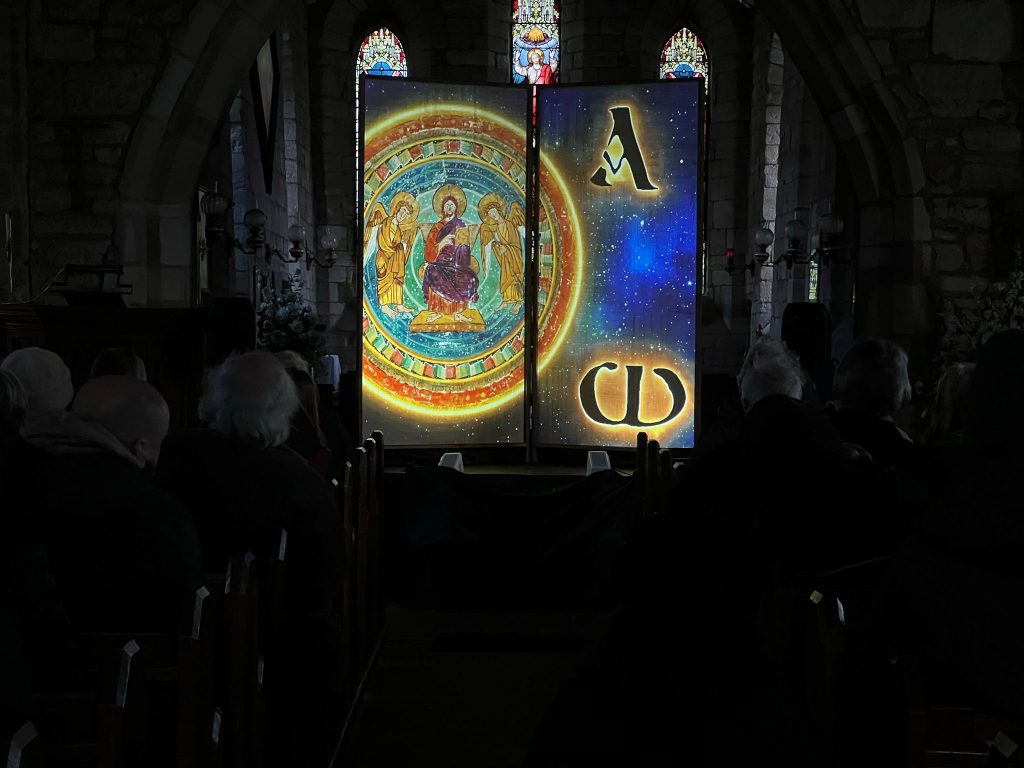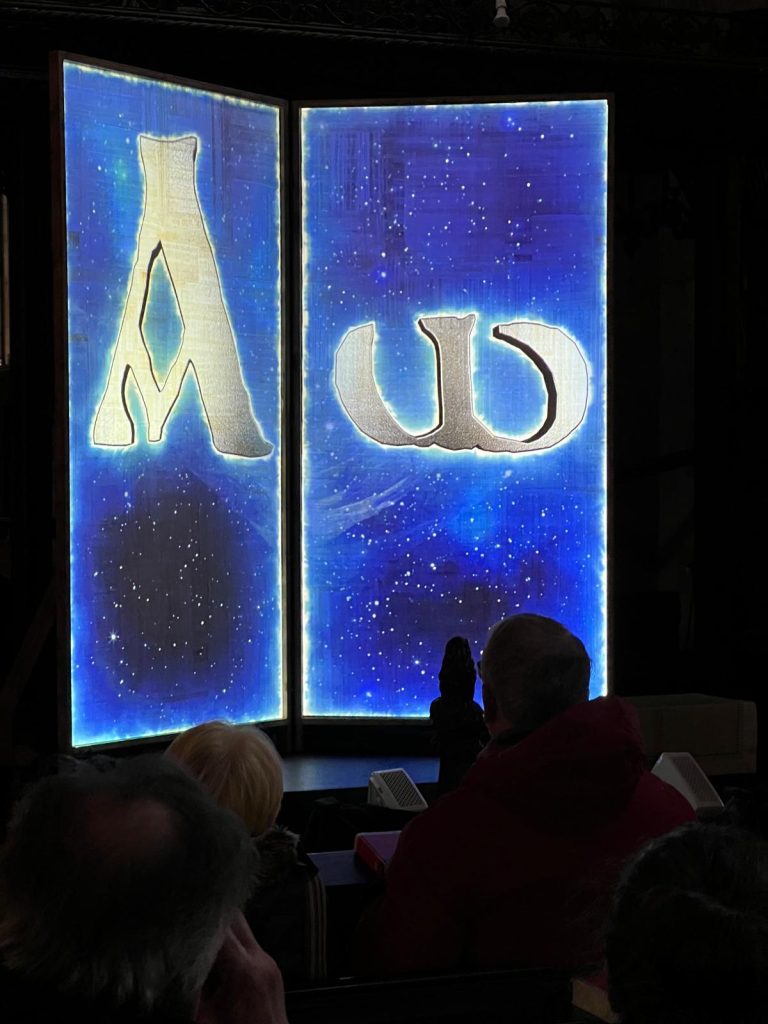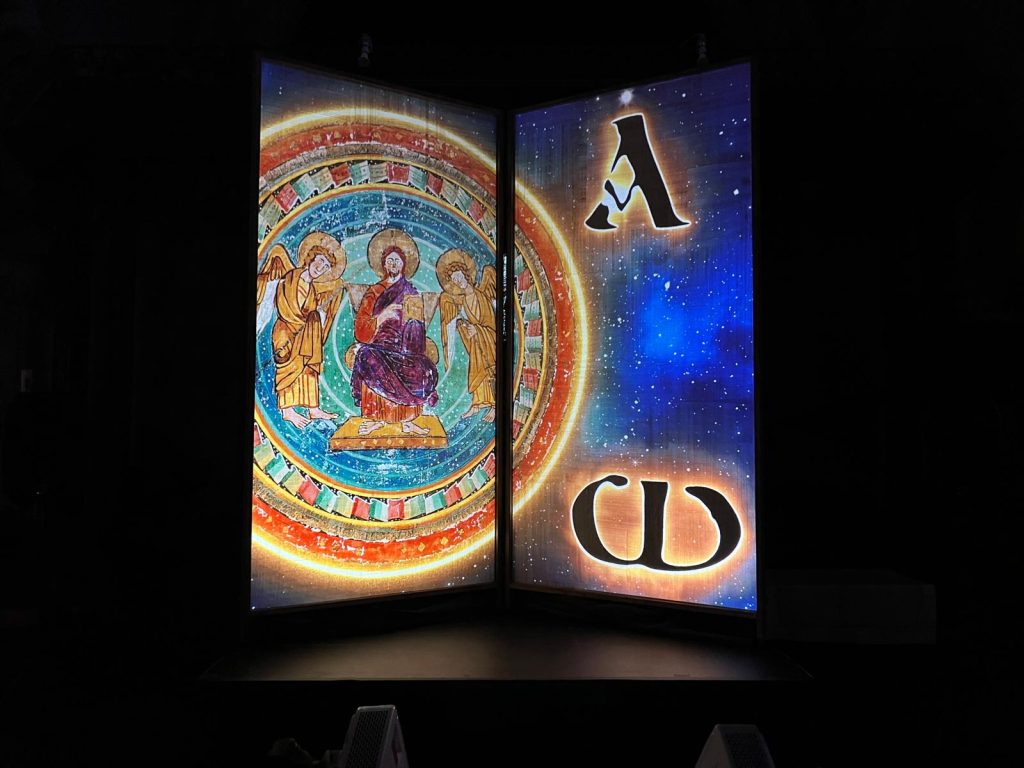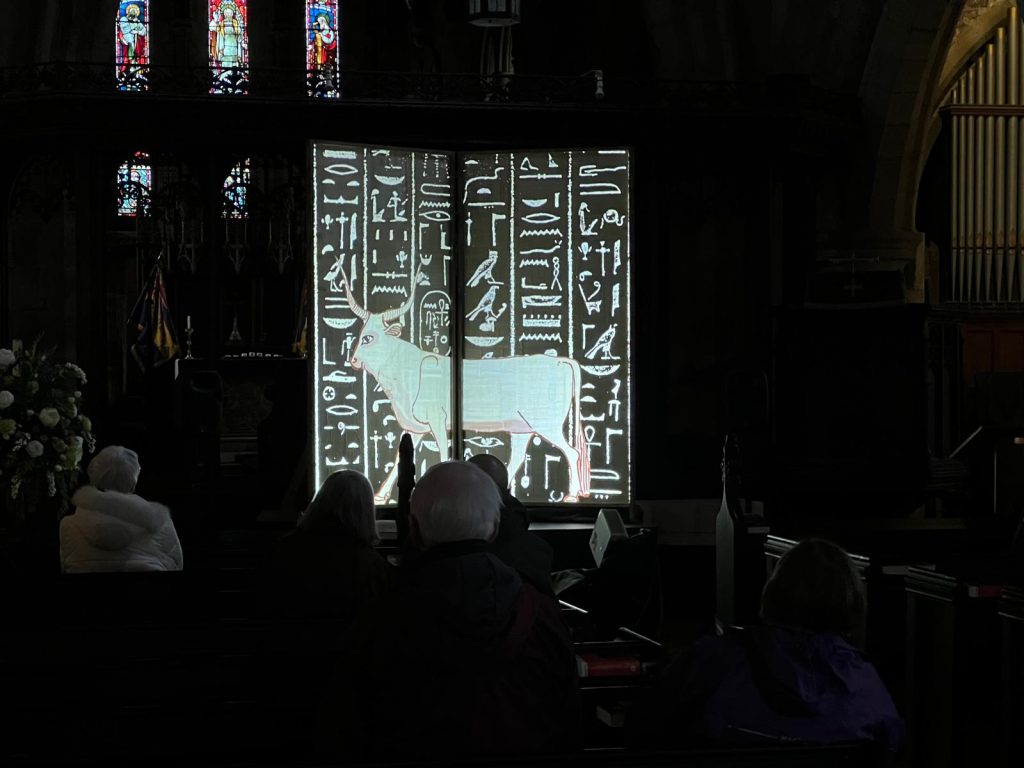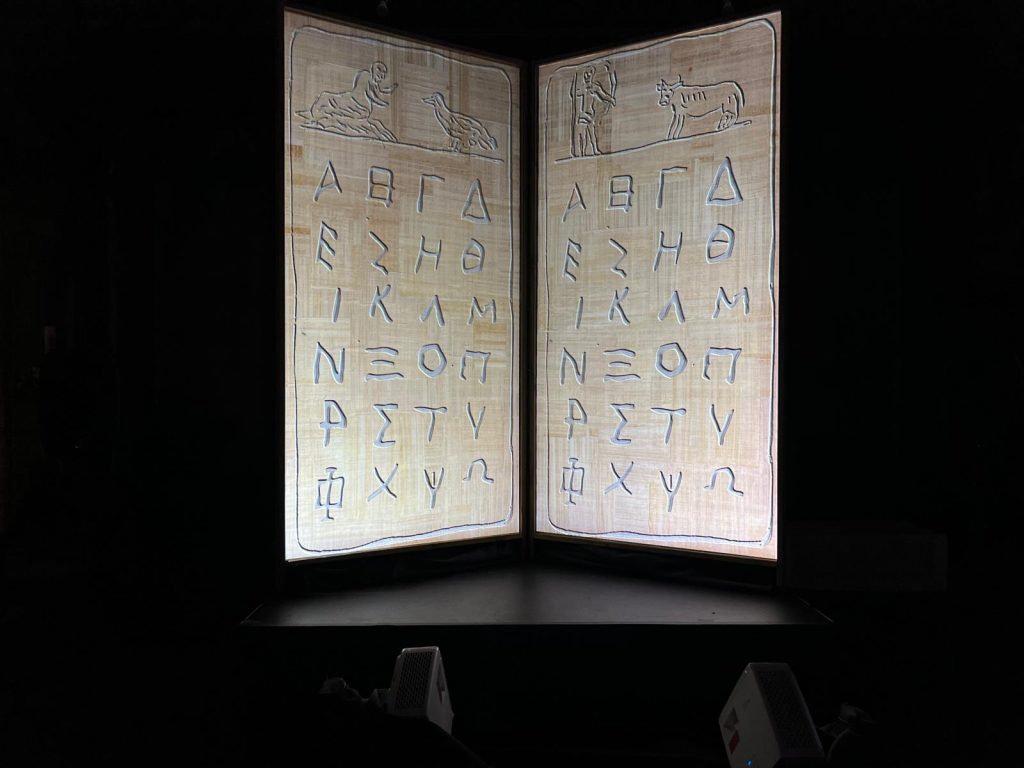
The Projection Studio is proud to be part of Rivers of Ink, an extraordinary light and sound experience created in collaboration with Durham University, bringing new life to one of the world’s most significant manuscripts the Codex Amiatinus, often described as the world’s oldest complete Latin Bible.
This immersive installation blends cutting-edge projection mapping, academic research, and artistic storytelling to transform historic space into a living narrative of scholarship, heritage and human connection.
A Light and Sound Journey Through History
Commissioned as part of Durham’s cultural programme, Rivers of Ink takes audiences on a visual and sonic journey through the creation, journey and rediscovery of the Codex Amiatinus. Through large-scale projection on historic architecture, the story unfolds in layers, script, symbolism, movement and music, creating a deeply atmospheric experience.
At its heart, this is more than a projection. It is the meeting point of:
- Academic research
- Creative interpretation
- Architectural illumination
- Immersive public storytelling
The result is an installation that connects modern audiences with over 1,300 years of history.
Turning Research into Visual Storytelling
Durham University has also released a dedicated podcast exploring the scholarship behind Rivers of Ink, highlighting the depth of research that informed the artwork. The series explores the cultural and historical importance of the Codex and the academic insights that shaped the narrative.
We are delighted that The Projection Studio will feature in the upcoming episode, discussing how we translated detailed research into a compelling projection mapping experience.
Bridging the gap between academic insight and public engagement is something we care deeply about. Projects like Rivers of Ink demonstrate how projection on buildings can become a powerful tool for cultural interpretation, making complex history accessible, emotional and visually unforgettable.
The Technical Craft Behind the Rivers of Ink Experience
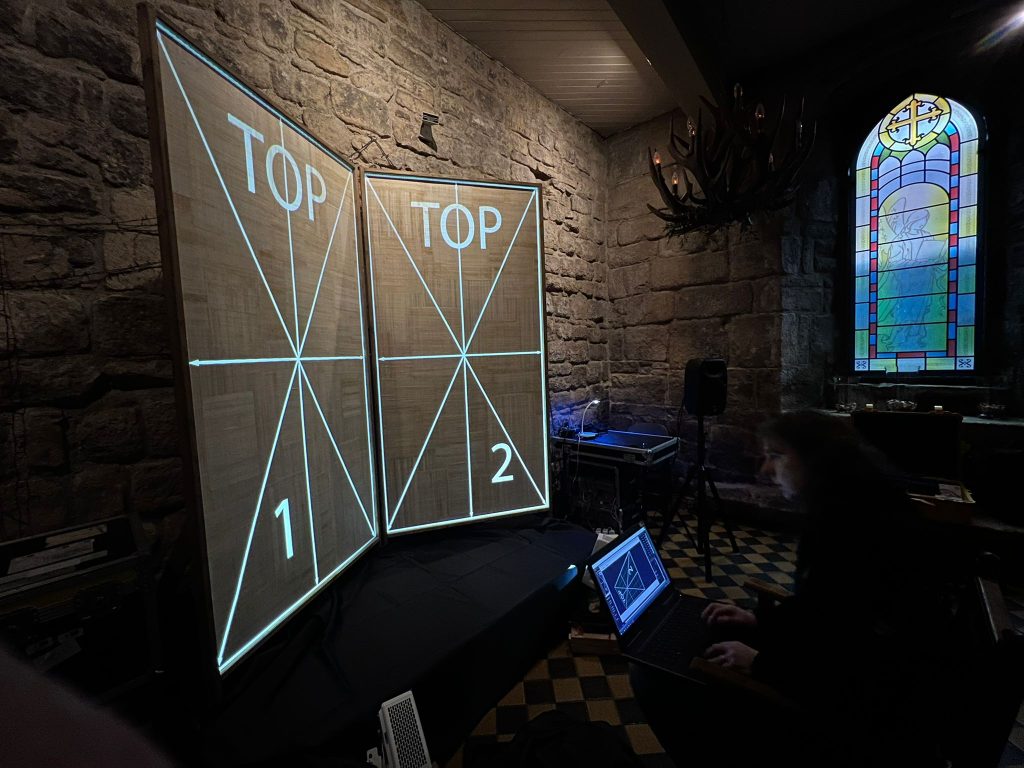
Delivering Rivers of Ink required detailed planning, site analysis and technical precision. Our team provided:
- High-lumen projection equipment
- Architectural mapping and alignment
- On-site installation and calibration
- Playback and show control integration
Projection mapping on heritage sites demands sensitivity and accuracy. Every beam of light must complement, not compete with, the building’s historic fabric. Our role is to ensure that technology enhances storytelling without overshadowing the architecture itself.
Why Cultural Institutions Are Turning to Projection Mapping
Across the UK, universities, cathedrals, museums and heritage sites are increasingly using projection mapping to:
- Bring archival research to life
- Increase public engagement
- Attract wider audiences
- Connect contemporary visitors with historic narratives
Rivers of Ink is a perfect example of how light can become a language, one that communicates scholarship in an accessible and memorable way.
Looking Ahead
Being part of this project reinforces The Projection Studio’s commitment to working at the forefront of cultural projection mapping in the UK. From city-wide festivals to heritage storytelling, we continue to collaborate with academic institutions, artists and creative partners to transform research into experience.
We look forward to sharing more insights in the upcoming Durham University podcast episode and continuing to explore how light, architecture and scholarship can intersect.
Work With The Projection Studio
If you are a university, cultural organisation or heritage site looking to translate research into a powerful public experience, we would love to collaborate.
Contact us to discuss your next projection mapping project.
Follow us on our social channels – Facebook, Instagram and LinkedIn for updates, behind-the-scenes content and the latest developments in architectural projection mapping.